Help Tab in MS Excel (Microsoft Excel Docs). (Lession – 17)
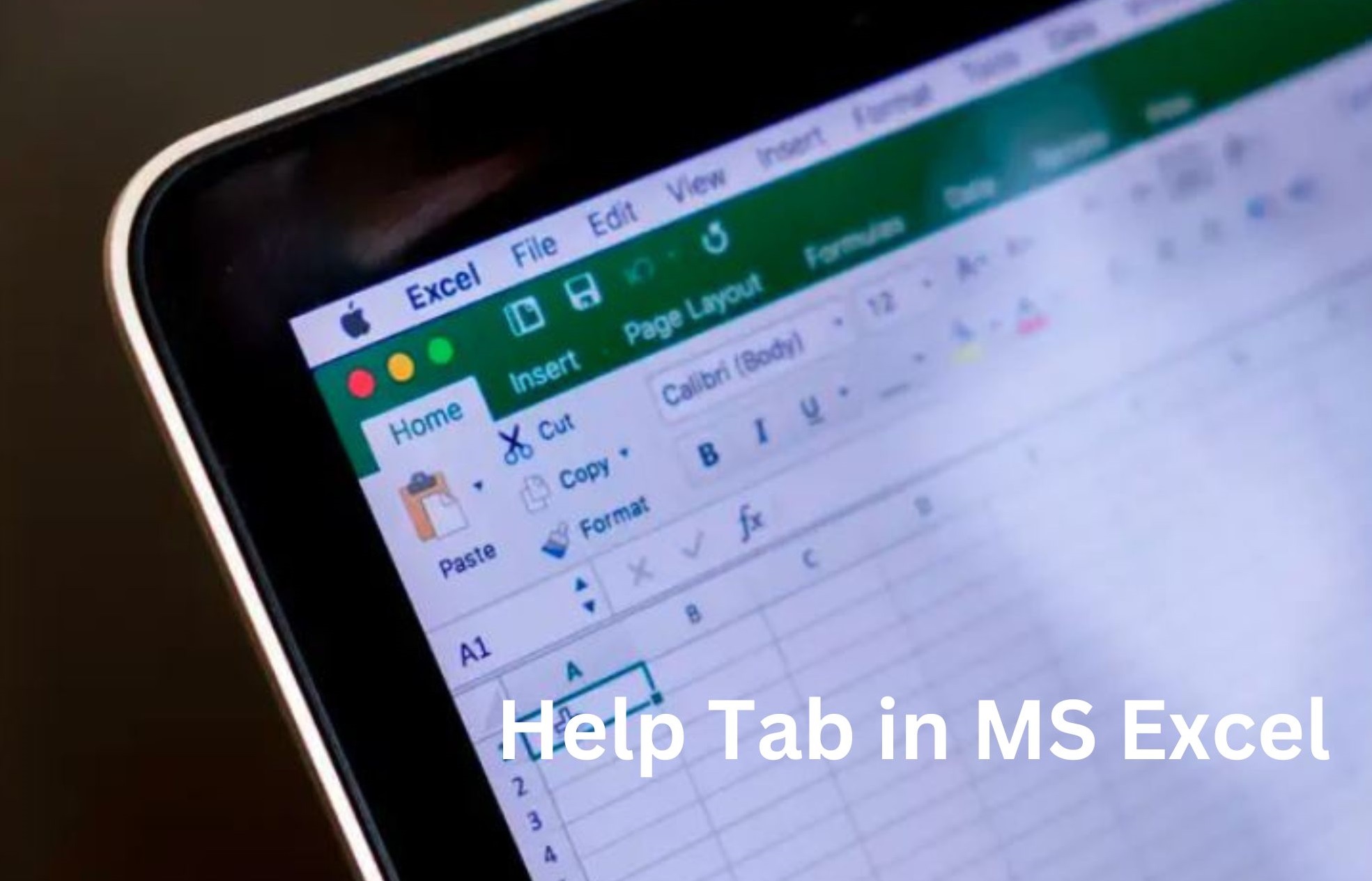
MS Excel 2019 Help Tab saw the addition of this built-in tab, which allows for easy access to the Help Task Pane as well as a limited number of helpful internet connections.

MS Excel 2019 Help Tab saw the addition of this built-in tab, which allows for easy access to the Help Task Pane as well as a limited number of helpful internet connections.

(Developer Tab), While working with macros, add-ins, and worksheet controls, this tab will not be visible by default; yet, it is quite helpful in certain situations. To reveal this tab, click “Customize Ribbon” from the menu that appears after selecting “File > Options.”
All of the tabs that are already incorporated into the system will be shown on the right side. Find Developer and mark it as checked.

View Tab in MS Excel View Tab View Tab On the Home Tab, under the heading “Cells Group, Format > Unhide,” you will find the instructions that make it possible to hide and reveal worksheets. This page contains the commands that allow you to hide and reveal workbooks (as well as windows on your computer). Sheet View Switch Sheet View – This workbook has a drop-down list that lists all of the various sheet views that can be easily switched between (View Tab). Keep – Creates a new sheet view that is based on the existing view in View Tab. Exit – This function will close the sheet view that is now active and return to the default view. New – Allows you to specify a new view for the sheet. The term “Temporary View” is used to refer to newly created views until they are saved successfully in View Tab. Options – The only time this will be enabled is when. Displays the “Sheet View Options” dialog box, which gives you the ability to rename, duplicate, and remove individual sheets, as well as switch between multiple views in a short amount of time in View Tab. Workbook Views Normal – This function displays the worksheet in its standard view (View Tab). This view may also be accessed using a shortcut that is located in the bottom right corner of the status bar. Page Break Preview – Page breaks may be adjusted using this tool. This view may also be accessed using a shortcut that is located in the bottom right corner of the status bar. Page Layout – Presents the worksheet in the format that it will be shown on a printed page. In addition to displaying a very helpful horizontal and vertical ruler, this tool also allows you to create or edit headers and footers, check margins, row and column titles, and scale choices. The Print Preview should not be confused with this. This view may also be accessed using a shortcut that is located in the bottom right corner of the status bar. Custom Views – Allows the “Custom Views” dialog box to be shown. Show Ruler – When you are in Page Layout view, this feature will only become active. The display of the horizontal and vertical rulers may be toggled with this button. When you are in Page Layout view, you will only be able to access this feature. You have the ability to modify the units that are shown by going to the Display, Ruler Units section of the Excel Options tab. It is the default option for the ruler to show the default units that are defined in the control panel’s regional settings. Inches, centimeters, or millimeters are all alternatives for these units of measurement. Gridlines – This toggles the display of gridlines on the worksheet that is now active. This function provides a shortcut to the Excel settings, Advanced tab, which displays settings for this worksheet and displays gridlines. Formula Bar – Performs a toggle operation on the formula bar display. Offers a shortcut to the Excel Options menu, namely the Advanced tab and the Show formula bar. Headings – Switches the appearance of the rows that have headings. Offers a shortcut to the Excel Options menu, namely the Advanced tab and the Show row and column headers option. Zoom Zoom – This button brings up the “Zoom” dialog window. 100% – Resize the workbook to be one hundred percent of its regular size. Zoom to Selection – You may zoom the worksheet so that it just shows the cells that are presently chosen. Window New Window – Opens a new window of the worksheet you are currently working on. Arrange All – The screen should be tiled with all of the open windows side by side. Freeze Panes – Turning down. Freeze Window Panes, Freeze Top Row, and Freeze First Column are the commands that may be found in the drop-down menu. Split – Use this feature to divide the window into many panes that can be resized, giving you the ability to see the same worksheet from various perspectives. Hide – Allows the current window or workbook to be hidden. Unhide – This function brings up the “Unhide” dialog box, which gives you the ability to reveal a workbook or window. View Side by Side – This will enable you to compare the contents of two different workbooks by viewing them side by side. Synchronous Scrolling – To ensure that two windows scroll in tandem with one another, synchronize their scrolling. In order to initiate the execution of this command, it is necessary to activate the View Side by Side option. Reset Window Position – To ensure that the two windows being compared take up an equal amount of space on the screen, reset the window positions of each of them. In order to initiate the execution of this command, it is necessary to activate the View Side by Side option. Switch Windows – Drop-Down. The drop-down contains a list of all the workbooks/windows that are currently open. Macros Macros – Button that has a drop-down menu. This button is a shortcut to View Macros, which may be used to show the “Macro” dialog box, which lists all of the macros that are currently accessible. The instructions that are included in the drop-down menu are as follows: View Macros, Record Macro, and Use Relative References. Read more:- Using of Review Tab in MS Excel (Microsoft Excel Docs). (Lession – 14) Narinder KumarHi, I’m Narinder Kumar, founder of BlogsBuz.com. I create articles and generate celebrity biographies, providing verified, up-to-date content. As an SEO expert and online tools creator, I also share practical tips on making money online, finance management, blogging, and passive income. My mission is to provide accurate information and keep you away from fake content, ensuring you stay well-informed and make smart decisions online. blogsbuz.com

Review Tab in MS Excel Proofing Spelling – (F7). Activates the “Spelling” dialog box on the screen (Review Tab). You are able to verify the spelling on the worksheet that is now active. Thesaurus – The visibility of the Research task pane is toggled, and the default research service is set to the thesaurus in Review Tab. Workbook Statistics – Displays a dialog box that notifies you of the total number of various things that are included inside the currently open worksheet (Review Tab). Accessibility Check Accessibility – This item displays the Task Pane for the Accessibility Checker in Review Tab. The purpose of this is to identify any areas of your workbook that may be modified to better accommodate those with disabilities. Insights Smart Lookup – Allows the Smart Lookup Task Pane to be shown in Review Tab. Bing is the engine that drives this, and it offers wiki pages as well as the most relevant searches from the internet. Language Translate – The visibility of the Research task pane is toggled, and the default research service is set to the translation. Comments New Comment / Edit Comment – (Shift + F2). Adds a remark to the cell that is now active. Delete – It deletes the remark that was chosen. Previous Comment – Continues on to the remark that was made before in the current worksheet. Next Comment – Proceeds to the next remark in the workbook that is now active. Show Comments – The display of the Comments task pane may be toggled on and off. Show/Hide Comment – Activates the display of the comment in the cell that is now active. Show All Comments – Changes the way that comments are shown in the current workbook, which includes all worksheets. Show Ink – Allow the active workbook to display or conceal the ink. It is only applicable to tablets. Notes Notes – Turning down. The following commands are included in the drop-down menu: New Note, Previous Note, Next Note, and Display/Hide of Note, Display all of the notes and convert them into comments. Protect Protect Sheet – This is the dialog window that displays the “Protect Sheet” Protect Workbook – The following instructions are shown in the drop-down menu: Protect Structure and Windows, in addition to other choices for restricting permission privileges. Allow Edit Ranges – Provides the ability for certain users to modify particular ranges inside a workbook or sheet. It is necessary for you to configure your security settings by using the Protect Sheet command before you can use this capability. Once the worksheet has been protected, this command will no longer be available. Unshare Workbook – By default, this feature is turned off. In the event that you open a workbook that is presently being shared by using the legacy “Share Workbook” function, this button will become active, therefore enabling you to unshare the workbook. Workbooks that were shared have been replaced with those that are co-authored. To bring up the Share Task Pane, you need to press the ‘Share’ button that is located in the upper right corner. In order to be accessible online, workbooks need to be stored. Ink Hide Ink – Turning down. Delete All Ink on Sheet and Delete All Ink on Workbook are the instructions that can be found in the drop-down menu. Hide Ink is another option. Read more:- Data Tab in MS Excel (Microsoft Excel Docs). (Lession – 13) Narinder KumarHi, I’m Narinder Kumar, founder of BlogsBuz.com. I create articles and generate celebrity biographies, providing verified, up-to-date content. As an SEO expert and online tools creator, I also share practical tips on making money online, finance management, blogging, and passive income. My mission is to provide accurate information and keep you away from fake content, ensuring you stay well-informed and make smart decisions online. blogsbuz.com

Data Tools in Data Tab (MS Excel) Data Tools Text to Columns – The “Convert Text to Columns Wizard” dialog box is shown before the user (Data Tab). Flash Fill – Values are being filled in automatically. Remove Duplicates – Allows the “Remove Duplicates” dialog box to be shown. Data Validation – Button that has a drop-down menu in Data Tab. The “Data Validation” dialog box is shown when the button is pressed. Among the instructions that are available via the drop-down menu are Circle Invalid Data and Clear Validation Circles. Consolidate – Allows the “Consolidate” dialog box to be shown. Relationships – You are able to build or change relationships between tables, which enables you to display data from several tables that are connected to one another on the same report. Manage Data Model – It opens the window for the Power Pivot. In order to make use of this functionality, you will need to activate the Data Analysis add-ins. Forecast What-If Analysis – Turning down. There are three commands that may be found in the drop-down menu: Scenario Manager, Goal Seek, and Data Table. Forecast Sheet – This function displays the “Create Forecast Worksheet” dialog box, which enables you to predict the data associated with your timeline. Outline Group – Button that has a drop-down menu. The button gives you the ability to group a number of rows and columns together. Additionally, the commands Group and Auto Outline are included inside the drop-down menu. The Auto Outline command generates an outline automatically based on the area that is currently being used. Ungroup – Button that has a drop-down menu. Using this button, you are able to remove the outlines from the rows and columns that are now active. There are two commands that may be found in the drop-down menu: Ungroup and Clear Outline. If you use the Clear Outline command, all of the outline levels will be removed. Subtotal – Incorporate subtotals for the rows that have been picked automatically. Show Detail – To expand a collection of cells that have collapsed. Hide Detail – Bring together a collection of cells. Analysis Data Analysis – You will only see this if you have the Analysis-ToolPak add-in installed on your computer. Allows the “Data Analysis” dialog box to be shown. Solver – A message like this will only appear if the Solver add-in is loaded on your computer. This is the dialog window that displays the “Solver Parameters” Read more:- Data Tab in MS Excel (Microsoft Excel Docs). (Lession – 12) Narinder KumarHi, I’m Narinder Kumar, founder of BlogsBuz.com. I create articles and generate celebrity biographies, providing verified, up-to-date content. As an SEO expert and online tools creator, I also share practical tips on making money online, finance management, blogging, and passive income. My mission is to provide accurate information and keep you away from fake content, ensuring you stay well-informed and make smart decisions online. blogsbuz.com